
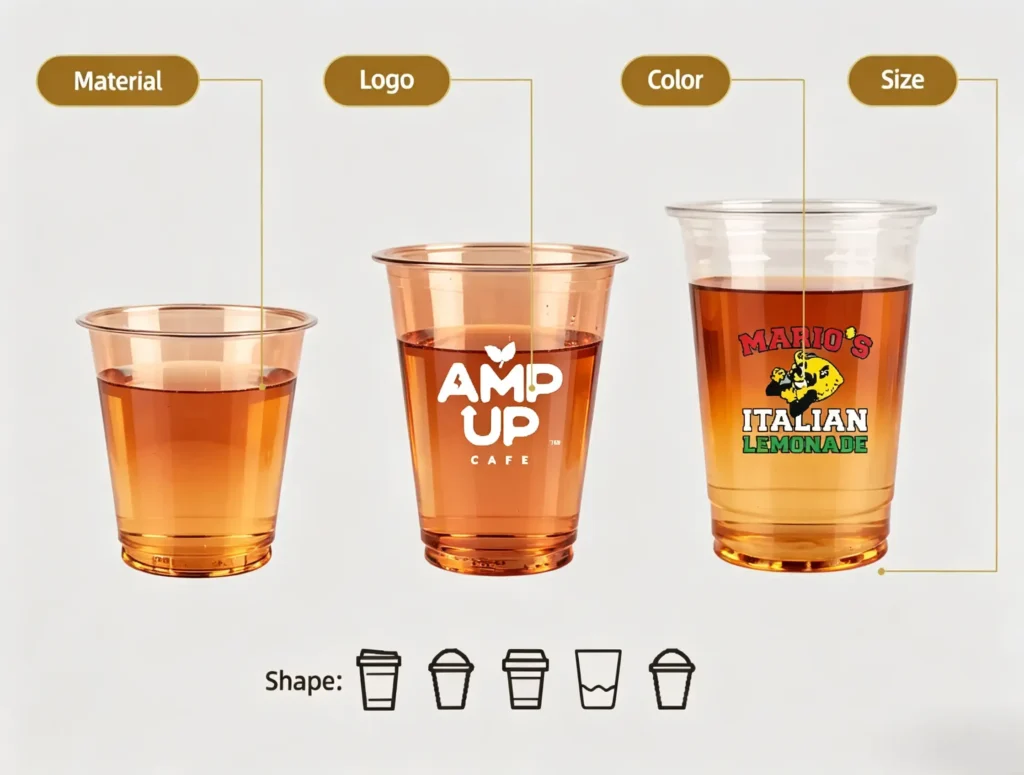
When it comes to packaging cold beverages, desserts, and ready-to-eat snacks, PET (Polyethylene Terephthalate) plastic cups have become one of the most popular choices across the food and beverage industry. Their crystal-clear appearance, durability, and versatility make them a go-to solution for cafes, bubble tea shops, juice bars, and food retailers worldwide. In this guide, we’ll break down what PET cups are, the different types available, their common applications, and how to choose the right one for your business.
What Is PET Plastic?
PET, short for Polyethylene Terephthalate, is a lightweight, transparent thermoplastic widely used in food-grade packaging. It’s the same material commonly found in bottled water and soft drink bottles, prized for its:
- Excellent clarity — showcases the product inside, ideal for visually appealing drinks and desserts
- Strong impact resistance — durable enough to withstand handling, shipping, and everyday use
- Good barrier properties — helps protect contents from moisture and oxygen
- Recyclability — PET is one of the most widely recycled plastics globally, making it a more sustainable choice compared to some alternatives
Types of PET Plastic Cups
PET cups come in a range of shapes, sizes, and structural designs to suit different beverage and food applications:
1. Standard Clear Cups
The most common type, used for cold drinks like iced coffee, soda, and juice. These cups typically range from 12oz to 24oz and pair with flat or dome lids.
2.U-Shaped / Bubble Tea Cups
Designed with a distinctive tapered shape, these cups are popular for bubble tea and smoothies, often used with wide-mouth dome lids that accommodate large straws and toppings like tapioca pearls.
3.Cold Cups with Rolled Rims
Featuring a reinforced rolled rim for added strength and lid compatibility, these are ideal for high-volume retail and quick-service restaurant use.
4.Parfait & Dessert Cups
Smaller, often layered or tiered PET cups designed for yogurt parfaits, fruit cups, and dessert presentations, where visual appeal is key.
5.Tamper-Evident Cups
Cups with locking or sealed lid mechanisms, commonly used for delivery and takeout to ensure product safety and freshness during transport.
Common Applications of PET Cups
PET cups are used across a wide range of food service settings, including:
- Bubble tea and specialty beverage shops — for cold tea, coffee, and milk tea drinks
- Juice bars and smoothie shops — showcasing colorful, layered drinks
- Cafes and quick-service restaurants — for iced coffee, lemonade, and soft drinks
- Grocery and retail food sections — parfaits, fruit salads, and grab-and-go snacks
- Catering and events — individual dessert or beverage servings
How to Choose the Right PET Cup
Selecting the right PET cup for your business involves balancing function, presentation, and cost. Here are the key factors to consider:
1. Product Compatibility
Match the cup size and shape to your product. Thicker drinks like bubble tea may need wider openings for straws and toppings, while clear layered desserts benefit from taller, straight-walled cups.
2. Volume and Sizing
Choose a size that matches your standard serving portions — common sizes range from 4oz for small desserts up to 32oz for large beverages. Offering a few standard sizes helps simplify inventory management.
3. Lid Compatibility
Ensure the cup rim is compatible with your lid style, whether flat, dome, or tamper-evident, to reduce spills and maintain a professional presentation.
4. Wall Thickness
Thicker-walled cups offer better durability and insulation against condensation, which is especially useful for cold, sweating beverages during hot weather.
5.Sustainability Considerations
If sustainability is a priority for your brand, look for cups made with recycled PET (rPET) content or those that are certified recyclable in your local market.
6. Branding Needs
PET’s clarity makes it an excellent surface for custom printing. Consider whether you need blank cups, cups with pre-printed branding, or cups compatible with sleeve labels.
Advantages and Considerations
Advantages:
- High transparency for attractive product display
- Strong and shatter-resistant compared to glass
- Lightweight, reducing shipping costs
- Recyclable and widely accepted in recycling programs
Considerations:
- Not suitable for hot beverages (best for cold and room-temperature use)
- Slightly higher cost than some alternatives like PP for certain applications
Conclusion
PET plastic cups remain a top choice for food and beverage businesses looking to combine visual appeal, durability, and practicality. By understanding the different types available and matching them to your specific product and branding needs, you can choose packaging that not only protects your product but also enhances the customer experience.
If you’re looking for high-quality, customizable PET cup solutions for your business, our team can help you find the right fit — from standard sizes to fully branded packaging options.